You’ll open your fence gate more than you touch any other part of the fence. A good gate swings freely, latches every time and stays square for years. Here’s how to choose the right fence gate.
Types of Fence Gates
- Walk gate: a single gate for people, wheelbarrows and mowers. The most common gate on a backyard fence.
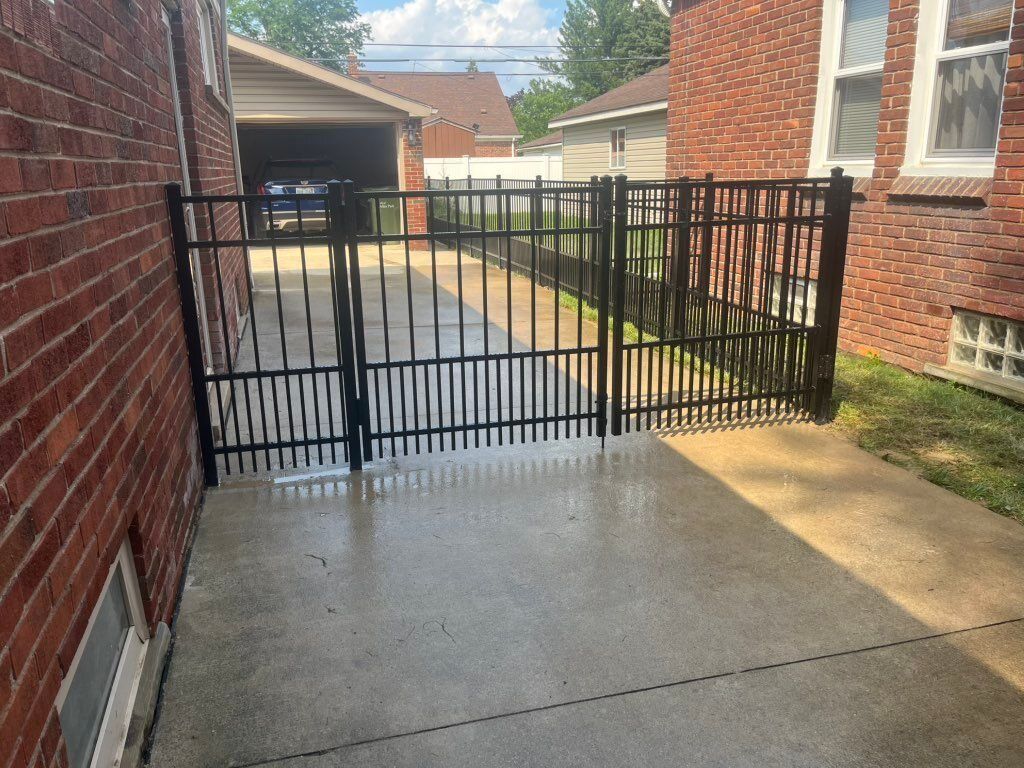
- Double drive gate: two gates that meet in the middle, for wide openings like a driveway, trailer access or a garage approach.
- Driveway gate: a gate across a driveway, often on an open fence like split rail.
How Wide Should a Fence Gate Be?
Wide enough for the widest thing you’ll move through it. Before your estimate, measure:
- Your lawn mower or riding mower
- A wheelbarrow or garden cart
- A trailer, boat or vehicle, if the gate is on a drive
Add room on each side so you aren’t threading the needle. For anything wider than a single gate handles well, a double gate is the better build, because it splits the weight between two posts.
Why Gates Sag
A gate sags when its hinge post moves or its frame racks out of square. To prevent it:
- A solid hinge post. The hinge post carries the gate’s full weight as leverage. It must be set solidly. See why fence posts lean.
- Diagonal bracing on wood gates, running in the direction that resists the drop.
- Heavy hinges sized to the gate, like the black strap hinges in our gate photos.
Gate Hardware That Matters
- Latches that close positively. For dogs and kids, mount the latch high or on the inside.
- Self-closing hinges so the gate shuts if someone forgets. They’re a must for dog yards. See the best fence for dogs.
- Drop rods on double gates to hold one leaf in place.
- Pool gates follow building code barrier requirements, so tell us if your fence encloses a pool.
Matching Gates to Your Fence
We build gates in wood, vinyl and aluminum to match the fence. Vinyl gates need reinforced posts and hardware rated for their weight.
Fixing an Existing Gate
A dragging or unlatching gate can often be fixed without replacing the fence: rehang it, add bracing, replace the hardware or reset the post. See fence repair.
Where to Put Your Gate
- Follow your natural path. Put walk gates where you already walk, for example between the driveway and the back door or along the route to the trash cans.
- Mind the slope. A gate that swings uphill can hit the ground. On sloped yards, we plan the swing direction and the gap at the bottom together.
- Leave room to swing. Make sure the gate can open fully without hitting a downspout, an air conditioner or a parked car.
- Think about visibility. On driveways and corner lots, cities protect sight lines. Harper Woods doesn’t allow fences that block visibility from a driveway, and Chesterfield Township keeps fences out of a 15-foot clear-vision triangle at roads and driveways. See corner lot fence rules.
Frequently Asked Questions
Should a Gate Swing in or Out?
In most cases, into your yard. An inward swing keeps the gate from blocking a sidewalk or driveway and keeps it on your property.
Do You Install Automatic Gate Openers?
We install manual walk gates, double drive gates and driveway gates. Tell us what you have in mind when you request a quote.
How Do I Fix a Gate That Drags on the Ground?
Usually, the hinge post has shifted or the gate frame has racked. Rehanging the gate, adding diagonal bracing or resetting the hinge post typically fixes it. See fence repair.
Can a Gate Be Added to an Existing Fence?
Usually, yes. Tell us the fence material and where you want the opening, and we’ll plan the posts and hardware.
Planning a new gate, or adding one to your existing fence? See gate installation or get a free quote.
Planning a fence? We check the rules for your address as part of every free estimate. Request your free quote or call (810) 614-4181.